5-Bucket Asset Reserve Isolation & Solvency Formulas
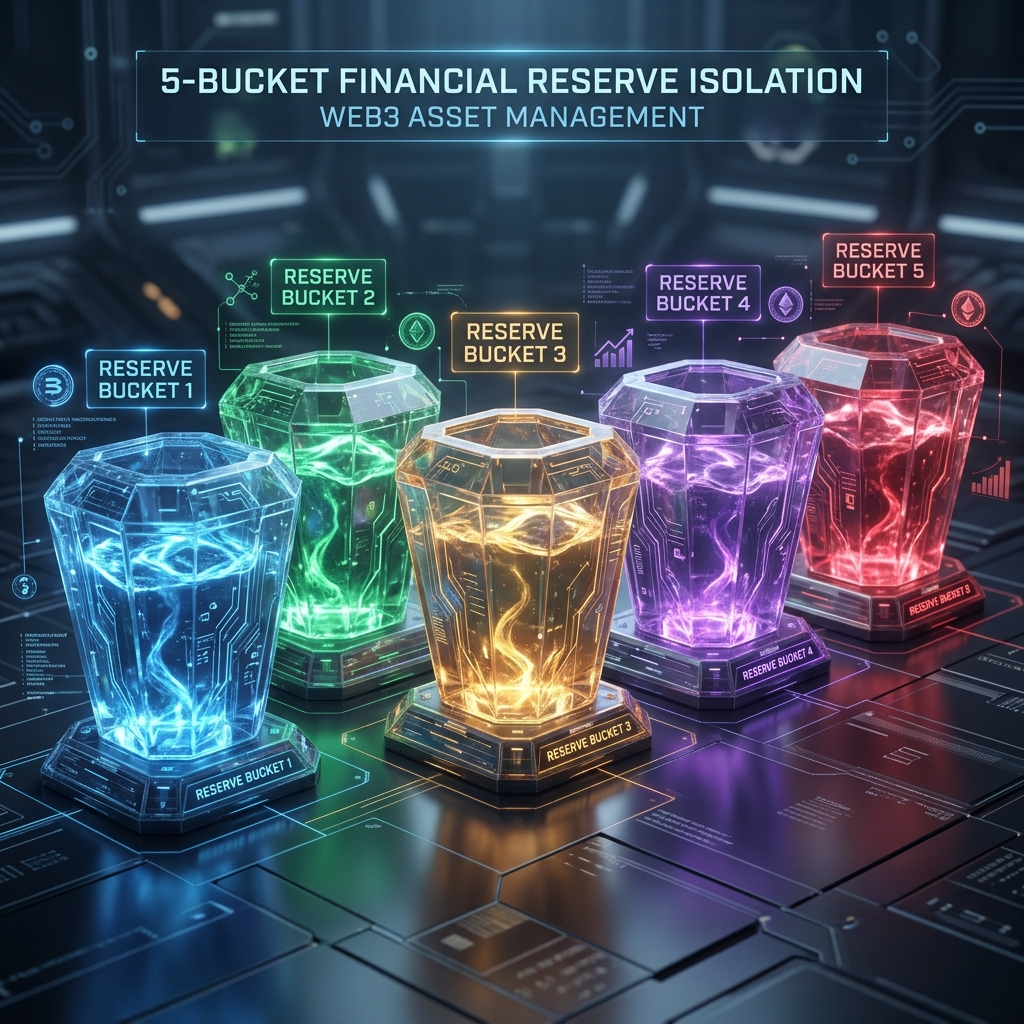
To prevent the most common and fatal credit crises of traditional digital betting platforms—such as house defaults, liquidity pool runs, and platform rug pulls—DeSix designs a 5-Bucket isolated reserve accounting system in its smart contracts. This system divides all USDC assets inside the contract into five physically isolated buckets based on their business attributes and strictly enforces a solvency invariant via on-chain assertions during every state change.
1. Definition and Responsibilities of the 5 Buckets
All USDC balances accumulated in the contract are strictly segmented at the accounting layer into the following five sections, and no section may be used for other purposes without authorization:
┌────────────────────────────────────────────────────────┐
│                      Total USDC Balance                 │
│                                                        │
│  ┌──────────┐ ┌──────────┐ ┌──────────┐ ┌──────────┐   │
│  │    LP    │ │  Payout  │ │  Refund  │ │   Fee    │   │
│  │  Equity  │ │ Reserve  │ │ Reserve  │ │ Reserve  │   │
│  │(lpEquity)│ │(payout   │ │(refund   │ │(feeRes.) │   │
│  │          │ │ Reserve) │ │ Reserve) │ │          │   │
│  └──────────┘ └──────────┘ └──────────┘ └──────────┘   │
│                                                        │
│  ┌──────────┐                                          │
│  │  Mining  │                                          │
│  │ Reserve  │                                          │
│  │(realYield│                                          │
│  │ Accrued) │                                          │
│  └──────────┘                                          │
└────────────────────────────────────────────────────────┘- LP Equity Bucket (
$.lpEquity):- Represents the true net asset value of Liquidity Providers.
- It contains the principal deposited by LPs plus accumulated market-making profits from lost bets, minus losses paid out to winning bets.
- This is the exclusive property of market makers, and no protocol fees or player prizes can directly dilute this bucket.
- Payout Reserve Bucket (
$.payoutReserve):- When an issue's betting closes and a winning proposal is consensus-approved, the system automatically transfers the "estimated maximum theoretical payout" for winning players from the LP equity bucket and locks it in the payout reserve.
- When winning players claim rewards (
claim), the funds are settled only from this bucket.
- Refund Reserve Bucket (
$.refundReserve):- If an issue transitions to the
Voidedstate due to oracle failures or disputes, the system transfers the total stake of all participants in that issue to the refund reserve bucket in a single transaction. - When players claim refunds (
claimRefund), payouts are processed from this bucket.
- If an issue transitions to the
- Fee Reserve Bucket (
$.feeReserve):- Accumulates the 0.3% protocol fee on each bet.
- This reserve is used solely for distributing fees (
distributeProtocolFees) to the treasury, operations team, buybacks, and mining pool rewards, separated from player payouts.
- Mining Dividend Bucket (
$.realYieldFeeAccrued):- Dedicated to accumulating the 25% cash flow dividend allocated to Miner from the protocol fee distribution, enabling users to claim USDC mining dividends with a single click.
2. Core Solvency Invariant
In the DeSixCore contract, every external call affecting USDC balances (such as placing bets, depositing liquidity, withdrawing liquidity, claiming rewards, and claiming refunds) must invoke _assertSolvency() before execution ends. The contract strictly enforces the following solvency invariant inequality:
$$\text{usdc.balanceOf}(\text{address(this)}) \ge \text{lpEquity} + \text{payoutReserve} + \text{refundReserve} + \text{feeReserve} + \text{realYieldFeeAccrued}$$
If any code exploit or external manipulation causes the accounting sum on the right side to exceed the actual USDC balance held by the contract, the transaction automatically reverts on-chain. This mathematically eliminates any possibility of "insolvency" or "excessive extraction."
3. P0-3 Asset Mismatch Vulnerability & Hardened Isolation
In the latest safety audit and Sprint 27 fixes, we patched a capital vulnerability in _voidIssueBatchInternal (voiding issues):
- Previous Vulnerability: To prevent Gas DoS attacks, voiding issues used an O(1) complexity design (directly altering the issue state without traversing orders). However, in older versions, the contract failed to deduct the issue's total stake
issue.totalStakefromlpEquityand inject it intorefundReserveat the moment of voiding. Consequently, subsequent refunds directly deducted fromlpEquity, subjecting LP funds to direct runs and violating the isolation invariant. - Hardened Fix:
- Following the refactoring, at the exact moment of voiding, the contract automatically deducts
issue.totalStakefromlpEquityand deposits it in full intorefundReservein a single transaction. claimRefundwas modified to be strictly and solely settled fromrefundReserve, no longer allowed to touchlpEquity.
- Following the refactoring, at the exact moment of voiding, the contract automatically deducts
- Impact: Refund assets are physically isolated the moment voiding occurs, ensuring that
getTVL()(which returns onlylpEquity) reflects true LP net assets at all times, free of pending player refund principal.